LibrarySoftware

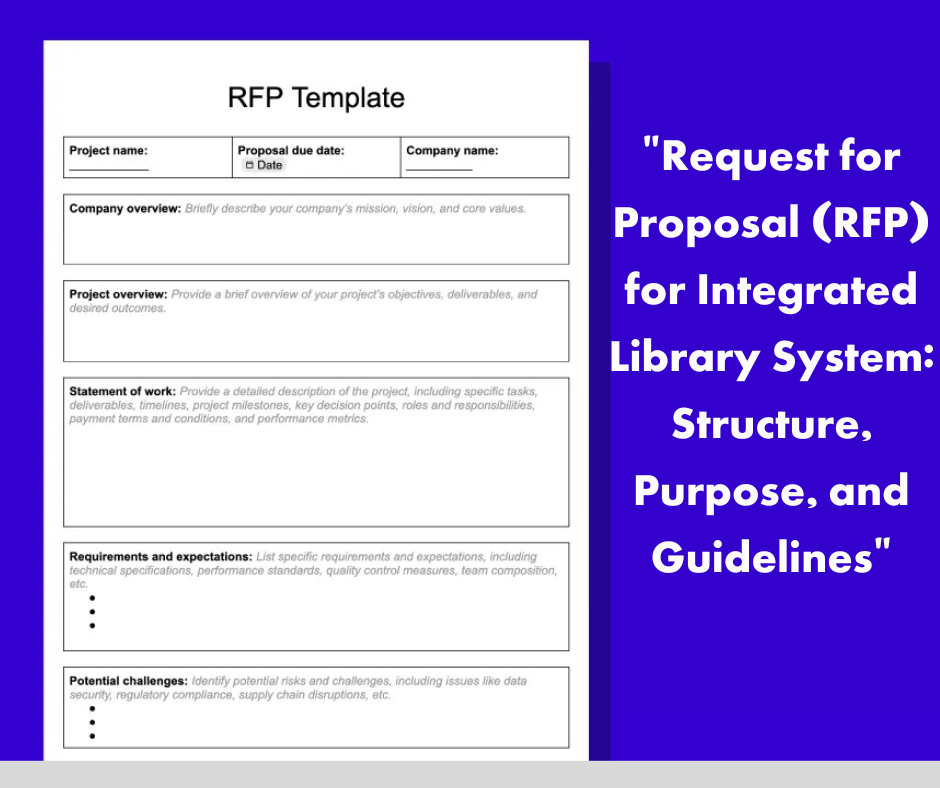
Request for Proposal (RFP) for Integrated Library System: Structure, Purpose, and Guidelines

“Request for Proposal (RFP) for Integrated Library System: Structure, Purpose, and Guidelines”

When an organization or institution invites business proposals from potential service providers or suppliers for the procurement of a product, service, or resource, the document prepared is called Request for Proposal or RFP. The purpose of an RFP for library activation is to: 1. Inform suppliers that a library is interested in acquiring integrated software. […]

“Request for Proposal (RFP) for Integrated Library System: Structure, Purpose, and Guidelines” Read More »

Library Management software: Origin and Categories.

Library Management software: Origin and Categories.

The history of library management software is closely linked to the evolution of computers and digital technologies. Below is a concise timeline outlining the key phases and milestones: 1. Pre-Digital Era (Before 1960s) Manual Cataloging: Libraries relied on card catalogs, ledgers, and manual indexing systems to track inventory and loans.Classification systems such as the Dewey

Library Management software: Origin and Categories. Read More »

CDS/ISIS in Library

CDS/ISIS in library: Aims; Feature, Function; Steps; Advantages & Disadvantages  

CDS/ISIS is widely used for bibliographic data management, specifically for designing, creating, and manipulating databases containing mainly textual data. A database typically consists of records, such as books in a library, with data elements including author names, book titles, call numbers, accession numbers, and more. CDS /ISIS software is old software used in libraries and

CDS/ISIS in library: Aims; Feature, Function; Steps; Advantages & Disadvantages   Read More »

Scroll to Top