What Is Communication:
Communication is a process in which two or more people exchange ideas, information, knowledge, experiences, and human feelings through the use of different languages. In the language of communication, the person who conveys the information is called the sender and the person who receives it is called the receiver. Language can be spoken or written or communication can be through a sign or message.
Different Definitions of Communication by Famous Scholars
The means by which a person chooses or is forced to choose to relate to his environment can be called communication. The Oxford Dictionary says, ‘Communication is the exchange of meaningful information.’ Colin Cherry says, ‘Communication is the transmission of stimuli.’ Osgood says, ‘Cognition is a system that influences another.’ Wilbur Schramm says more clearly, ‘The system that maintains or develops human relationships or that exchanges experiences between many.
Function of communication:
The main functions of the communication process are to transmit information, educate, entertain and influence. Apart from this, some other functions can be achieved through any communication process. For example, creating a debate, spreading the taste of culture and creating an atmosphere of unity among everyone in the society, etc. If an atmosphere of unity can be created, it creates an environment of peace and happiness in the society through comfortable understanding.
Role of Communication in Human Relationships and Social Development
The role of public information is rooted in love and influence. Through media channels, we receive messages that are conscious, patriotic, scientific, and free from prejudice. The media should aim to foster a generation of young people who are free from bias. One of the primary functions of the media is to promote positive social change, and we need to evaluate the level of progress and setbacks in this regard.
Major Functions of Mass Communication
Today, the world of entertainment has become widely accessible to audiences through cable networks. However, this has also led to several negative consequences. Issues such as excessive advertising, sensationalism, inappropriate nudity, and the way television is presented have been on the rise. There is considerable public concern about these matters. Therefore, it is essential to address these issues and pave the way for meaningful development, which we will discuss further.
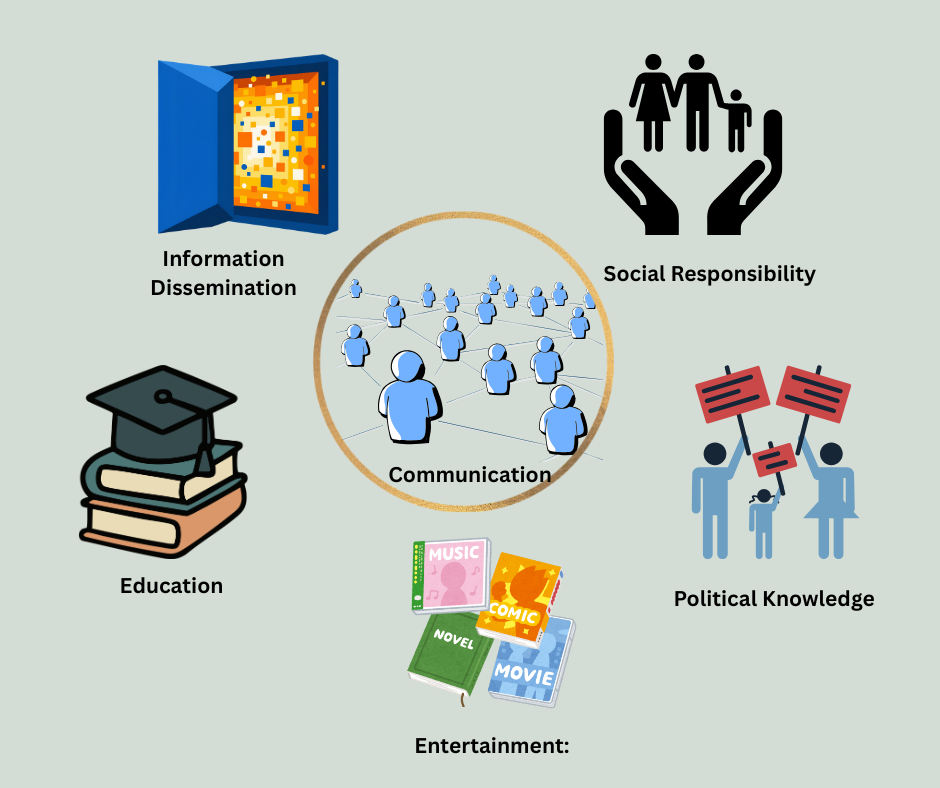
A. Information Dissemination: The primary function of mass media is to convey information to the public. Each day, the media undertakes the significant task of collecting and disseminating all types of news. People place high expectations on the media, believing that the objectivity of the information contributes to its credibility.
B. Educational Role of Mass Media in the Digital Age: One of the roles of the media is to promote mass education. It provides opportunities for individuals to learn about various subjects, including economics, sociology, science, and technology. In today’s world, where social isolation is prevalent, people have become increasingly dependent on the media. As a result, it is essential for the media to provide valuable content and education to the public. The media plays a crucial role in meeting the educational needs of today’s society.
C. Entertainment: Among the three main functions of mass communication, entertainment is the primary source of enjoyment in today’s media. Whether it’s through radio, television, drama, music, cinema, or dance, the value of entertainment cannot be overlooked. However, it is essential that this entertainment remains healthy, serving to guide and engage the audience. It is the shared responsibility of everyone in the media to uphold this standard.
D. Social Responsibility: Mass communication connects people with society. Through these channels, individuals are encouraged to take on constructive roles in fostering values within their communities. The media has a duty to promote political awareness and positive engagement among the populace. Ultimately, the media represents the common person.
E. Political Knowledge: Mass communication enhances the governance framework of the country. Political parties play a vital role in making citizens aware of democratic principles by highlighting both positive and negative aspects of political choices. This awareness strengthens the nation’s integrity. The media holds considerable power, and if misused, it can lead to significant consequences, as evidenced during times such as the state of emergency. The concept of time is relevant here; if leaders turn against their own people, they undermine their responsibility to progress.
Challenges Facing Mass Communication Today
In the analysis of mass communication, David (1969) identified seven key characteristics that help to understand the complexities involved. These characteristics are as follows:
1. Organizational Foundations of Effective Mass Communication: Successful mass communication relies on intricate organizational structures and processes.
2. Reaching a Large and Diverse Audience: Mass communication is designed to engage a vast audience, which includes individuals from various backgrounds and demographics.
3. Open Public Discussion and Individual Impact: The objective of mass communication includes fostering open discussions that can resonate with individuals on a personal level.
4. Diversity of Audiences: Audiences in mass communication are not homogeneous; they exhibit a wide range of structural, cultural, and personal differences, making the task of addressing them more challenging.
5. Global Reach: Mass communication transcends geographical boundaries, engaging people from various parts of the world simultaneously, often without any direct personal connection among them.
6. Lack of Direct Interaction: Typically, there is no immediate interaction between the media and its audience, which can limit the responsiveness of messages.
7. Audience Participation and Social Engagement: Audiences can be seen as fundamental groups within the social system, uniting around shared interests, which increases their engagement and impact within society.
Overall, public information plays a crucial role in enhancing the quality of life by facilitating informed discussions. By honing in on the individual needs of people, mass communication can emerge as a true ally in addressing societal concerns.