Just as a library requires reading materials, it also needs various types of furniture to store, organize, and facilitate access to these materials. Library furniture plays a vital role in ensuring efficient library operations, reader comfort, and the long-term preservation of library resources.
The furniture commonly used in libraries includes reading chairs, reading tables, bookshelves, steel bookshelves, wooden or steel cupboards, steel file cabinets, wicker chairs with arms, wooden chairs with arms, wicker chairs without arms, wooden chairs without arms, children’s chairs, steel chairs, cushion chairs, full secretary tables, half secretary tables, wooden cupboards, counter chairs, wooden tools, pigeon holes, newspaper racks, catalog cabinets, newspaper stick holders, atlas stands, magazine display racks, book exhibition tables, tender boxes, wooden stands with curtain cloth, book trolleys, photocopier machines, cyclostyle machines, letter weighing machines, film projectors, newspaper display racks with trays, sofa sets, computer tables, and computer chairs.
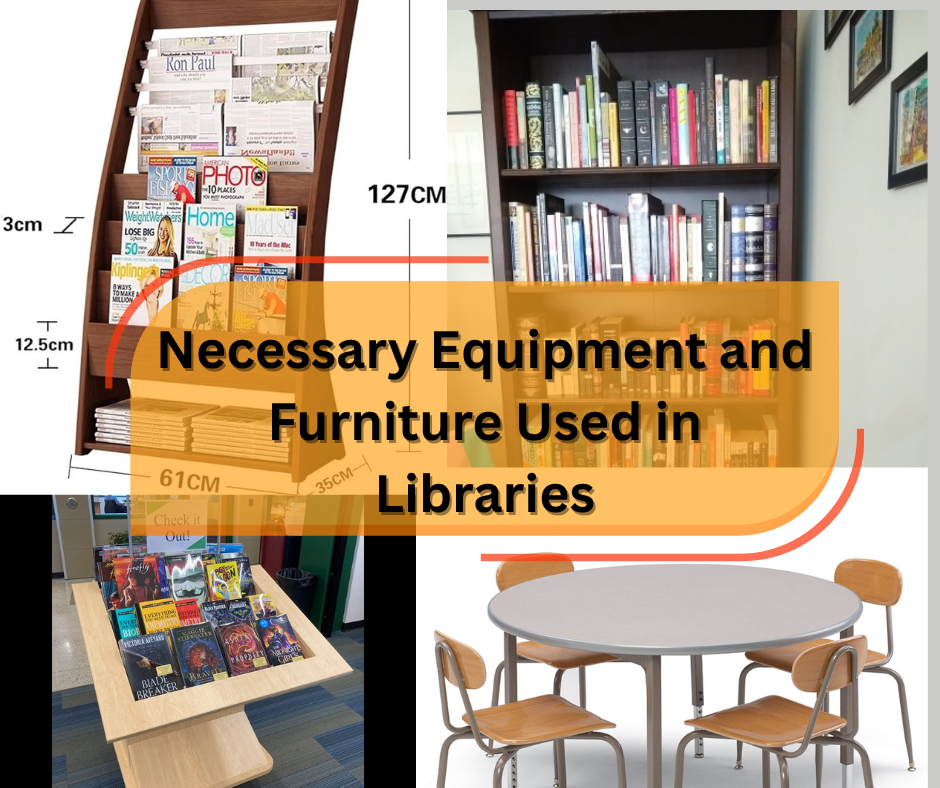
For library professionals, knowledge of the proper use, care, and maintenance of library furniture is essential. The important furniture used in libraries, along with their uses and maintenance procedures, are discussed below.
Reader’s Chair and Table
The most essential furniture for library users is the reading chair and reading table. A library cannot be imagined without these. Regardless of the type of library—academic, public, school, or special—chairs and tables are indispensable for reading and study.
Reading chairs and tables may be made of wood, processed boards, steel, foam, or cushioned materials. In modern library design, emphasis is placed on ergonomically designed furniture so that users can sit comfortably and study for extended periods without physical discomfort.
Care and Maintenance
Chairs and tables should always be kept clean and orderly. Harsh chemicals should not be used for cleaning. Every day, before opening the library, staff or cleaning personnel should thoroughly wipe all chairs and tables. Wooden and steel furniture should be varnished or repainted every three to four years to ensure durability and an attractive appearance.
Bookshelf
The bookshelf is one of the most important pieces of library furniture. Books are arranged systematically on shelves according to their classification numbers, which ensures easy and quick retrieval of materials by users.
Bookshelves may be made of wood or steel and are available in various sizes. A bookshelf with six shelves measuring approximately 6′–0″ × 4′–0″ × 1′–4″ is considered ideal. Excessively tall shelves should be avoided, as they restrict access for shorter users and compromise user convenience.
Care and Preservation
Bookshelves should be kept clean and free from dust. Cleaning should be carried out at least once a week using dry or slightly damp cloths. Wooden shelves should be varnished every three to four years, while steel shelves should be repainted during the same period.
Steel Cupboard or File Cabinet
Steel cupboards or file cabinets are used to store important documents, official records, and administrative files of the library. They also store materials required for the day-to-day official work of library staff.
Care and Maintenance
Steel cupboards and file cabinets should be cleaned regularly and wiped thoroughly. To prevent rust and prolong their lifespan, they should be repainted every three to four years.
Full Secretary Table and Half Secretary Table
Full secretary tables are generally used by library officers for official work, while half secretary tables are used by supporting staff. These tables are commonly made of wood or plywood and are designed to support routine administrative activities.
Care and Maintenance
Secretary tables should be kept clean, organized, and wiped regularly. Varnishing should be done every three to four years to maintain their condition and usability.
White Knot
White knot furniture is generally used by library officials for official work. It is usually made of wood. A four-shelf white knot measuring approximately 4′–0″ × 3′–0″ × 1′–2″ is considered ideal for library use.
Care and Maintenance
White knot units should be kept clean and wiped from time to time. To preserve their quality and appearance, varnishing should be carried out every three to four years.
Newspaper Rack
Newspaper racks are used for storing and displaying newspapers for readers. They may be made of wood, plywood, stainless steel, or high-quality iron. Wooden newspaper racks are often preferred due to their aesthetic value.
Care and Storage
Newspaper racks should be cleaned regularly to prevent dust accumulation. Depending on the material used, varnishing or painting every three to four years helps maintain their durability.
Catalog Cabinet
The catalog cabinet is an essential piece of furniture in traditional libraries. Catalog cards are arranged systematically—usually according to classification numbers—which enables users to locate books quickly and efficiently. Catalog cabinets may be made of wood or steel and are available in various sizes.
Care and Storage
Since catalog cabinets are frequently used by readers, they must be kept clean and hygienic. Wooden cabinets should be varnished, and steel cabinets should be repainted every three to four years to ensure long-term use.
Magazine Display Rack
Magazine display racks are used to store and display magazines and periodicals. They are usually made of wood, plywood, or steel, with wooden racks being more visually appealing.
Care and Preservation
Display racks should be kept clean and updated regularly as new issues arrive. Repainting or varnishing every three to four years helps maintain their appearance and durability.
Book Exhibition Table
Book exhibition tables are used to display newly acquired books or books selected for special occasions and exhibitions. Tables made of ordinary wood or veneered boards are commonly preferred for their attractive appearance.
Care and Preservation:
The table should be kept clean and dust-free at all times; it should be wiped regularly with a soft, dry cloth to maintain its appearance. Wooden or veneered exhibition tables should be varnished or polished every three to four years to protect the surface and enhance durability.
Book Trolley
The book trolley is an important functional item of library furniture. It is used to transport books from one place to another or from one floor to another. Book trolleys are designed to carry books of different sizes and weights, ensuring efficient material handling and reducing physical strain on library staff.
Care and Preservation:
The trolley should be cleaned regularly, and its wheels should be checked frequently to ensure smooth and safe movement. Metal parts should be painted periodically, and bolts or joints should be tightened when necessary to prevent damage and extend service life.
Conclusion
Proper selection, use, and maintenance of library furniture are essential for effective library management, user comfort, and preservation of library resources. Regular cleaning, periodic varnishing or painting, and attention to ergonomic design help ensure that library furniture remains functional, durable, and suitable for modern library environments.