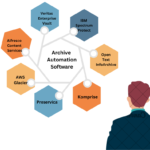
Automation management refers to the control and oversight of automated devices used in various processes. In today’s world, modern technologies play a crucial role in managing documents and archives.
These technologies facilitate the automation management of archival institutions.
Some examples include:
1. Reprography
2. Microphotography
3. Computer documentation
- Reprography:
Reprography involves creating images and copies through photographic means. In the current era, it is extensively used for research purposes and information dissemination.
There are mainly two types of reprographics:
A. Copying techniques
B. Electrography / Duplicating Process
A. Copying techniques: One or two/three copies are made directly from the original copy, this is called copying techniques.
Copying techniques are divided into three categories.
a.. Silver halide process or photogravure
b.. Diazography
c. Thermography
Copying techniques are categorized into three main types, each with distinct processes and applications:
a. Silver Halide Process: This traditional method, also known as photogravure, utilizes light-sensitive silver halide crystals to capture images. When exposed to light, these crystals undergo a chemical change, allowing for the creation of detailed photographic reproductions. This technique is commonly used in photography and printmaking.
b. Diazography: This modern copying technique utilizes diazo compounds that are sensitive to ultraviolet light. Diazography enables the production of high-quality images and is frequently used in technical documentation and for high-volume copying tasks. It provides several advantages, including rapid processing and cost-effectiveness. Known historically as the whiteprint or blue-line process, diazography is a photoprinting contact method used to reproduce translucent documents. The process involves exposing a translucent original document alongside diazo-sensitized paper to UV light, and then developing it with ammonia vapors to create a direct positive copy.
c. Thermography: In this process, heat is used to create images on specially coated paper. When heated, the coating changes color, producing a clear and precise image. Thermography is widely used for producing professional-quality prints, such as business cards and stationery, as it provides a raised, tactile finish.
Each of these techniques has unique characteristics that make them suitable for different applications in the fields of photography and printing.
B. Electrograph / Duplicating Process
Instead of traditional photography, which involves a complex and costly duplicating process, Photostat copying is currently the preferred method for document reproduction. This technique allows for copies to be obtained in just a few seconds. Libraries and research institutions extensively use Photostat copies for various research purposes. However, there are notable differences between the original documents and their copies. Similar to practices in Western countries, photocopies are collected to support researchers in our country. This method is also referred to as the electronic graphic method.
Microphotography is the process of reducing the size of large objects on photographic paper, a technique known as micrography. Images created through micrography can only be viewed using a magnifying glass. In 1839, John Benjamin Duncan from Britain successfully reduced 20 documents to one-eighth of their original length.
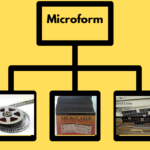
The microphotography system is mainly divided into two categories:
A. Microtransparencies
B. Microopaque
A. Microtransparency refers to the ability to create and maintain records using various transfer and transmission methods that ensure information preservation in compact formats. Key techniques include roll microfilm for easy storage; united microfilm for integrating different types; protective upper work jackets for organization; microfiche, which offers flat storage of document images; and holographic magnetic video discs for high-capacity visual data storage.
B.Micro Opek also utilizes several innovative methods for record-keeping, such as Micro Card, a compact data storage solution; Microm, which likely involves specialized micrographic techniques; Print, for reproducing information from microformats; and Microlex, a method for organizing and interpreting microtransparency records. Collectively, these tools facilitate efficient documentation and accessibility of information.
3. Computer Documentation:
In the past, records were permanently stored using a variety of methods. Over time, records were first kept on tablets and later on leather. The discovery of paper marked the start of the arduous journey. As a result, paper records were kept and office work was completed on paper. The creation, gathering, and storing of information have undergone numerous changes in the modern era. Nowadays, everyone wants easy access to information. The only way to easily obtain this kind of information is with a computer. A computer is a contemporary electronic device that uses data provided by people. In other words, a computer is a dependable, quick information provider that uses data provided by people. As a result of science’s rapid advancement, computers have begun to be used in all fields and for information storage, just like in all research institutions.
Institutions must incorporate specific mathematical topics related to computer documentation.
Firstly, the archives of various institutions should implement a system that creates programs based on categories and permissions.
Secondly, notifications should explicitly mention the subject of computer programming, including its origin, classification, timeframe, file number, code number, collection date, new number, amount, and other relevant details to facilitate easy information retrieval.
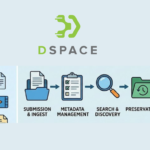
Thirdly, arrangements need to be established for computer systems to ensure that complete information is securely stored. Archives should be preserved, analyzed, and searched, while adhering to various government policies.
There should be a government policy for the collection and preservation of computer-generated government, semi-government, and private documents to ensure that the preservation of documents and works created through this new technology can be carried out without difficulties in the future.