The library reference department must remain aware of the latest information needs of its readers. It must also strive to collect information from various information sources spread around the world and present this information to the readers in a convenient format. Historically, reference librarians have been ahead of their colleagues in the use of technology. In the last century, technology-based reference services began to be provided through telephone and teletype-based services.
Later, whenever new technologies emerged, libraries took the initiative to use them to provide information services. The nature of reference services is technology-dependent, therefore, even in the present time, when the nature and scope of library services are constantly changing with the constant innovations of computer and telecommunication technology, reference librarians are still at the forefront of providing information services with the advancement of technology. According to B. Hirko, digital reference service is a type of library service that answers questions through computers in electronic ways such as email, web forms, interactive chat and application sharing. According to him, digital reference service is a reference service provided through computer-based interaction between library users and librarians. This service can use various media such as email, web form, chat video, web customer call center software, voice over Internet Protocol (VOIP) etc.
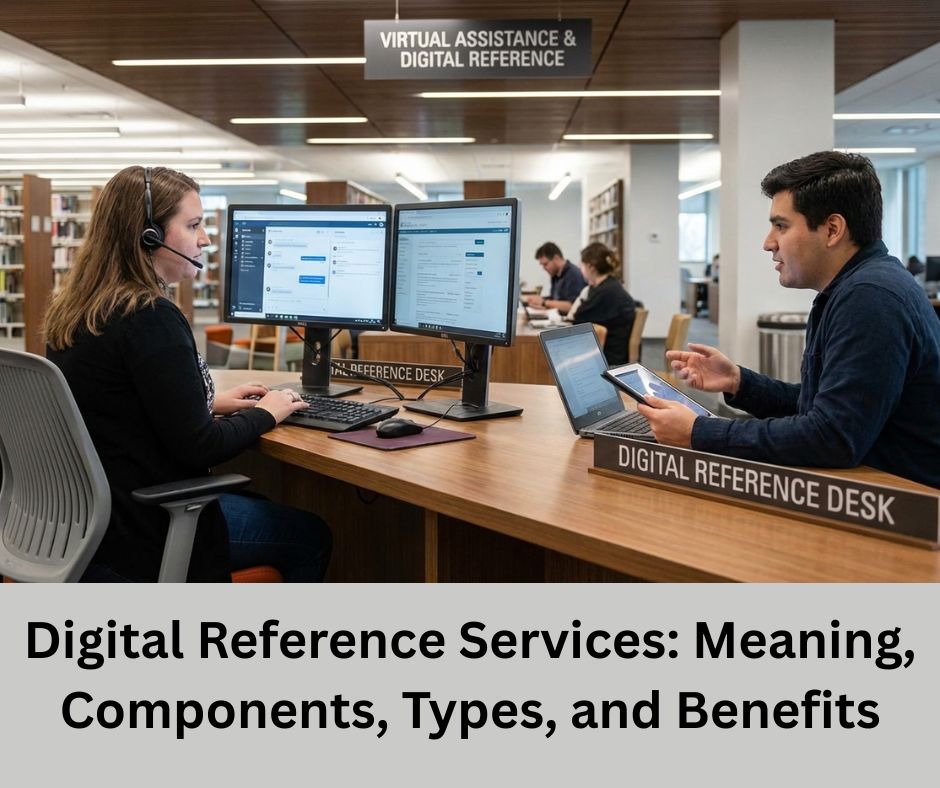
There are four key components to consider in the realm of digital reference services:
1. Service Recipient or User: This is the individual seeking knowledge, often characterized by diverse backgrounds and varying levels of technological comfort. They may be a devoted researcher digging for in-depth insights or a casual learner exploring new topics, each with unique needs and expectations.
2. Interface or Medium: This refers to the digital platforms facilitating access to information—dynamic websites, engaging chat services, or intuitive mobile applications. Each interface serves as the gateway through which users interact with vast reservoirs of knowledge, blending functionality with user experience.
3. Library Staff: The dedicated professionals who guide users through their informational journeys. These librarians are not just custodians of knowledge; they are enthusiastic navigators, equipped with expertise and empathy, committed to helping users uncover the information they seek in the digital landscape.
4. Printed or Electronic Information Resources: A treasure trove of knowledge that transcends the traditional form. Whether it’s the weighty tome of a printed book or the sleek, immediate access of digital documents, both serve as vital instruments in the quest for understanding. The emphasis here is not solely on the format but on the invaluable information these resources deliver.
In contrast to traditional libraries that often focus on the physical containers of information, digital reference services prioritize the essence of information itself. Here, references and provisions exist in a fluid, location-independent space, enabling a more expansive and flexible approach to knowledge access.
Benefits of Digital Reference Services:
Digital reference services have ushered in a new era for libraries. New possibilities have been created, and reader-librarian communication has reached a different level. The main benefits of digital reference are as follows:
1. Overcoming time and geographical gaps: Thanks to digital technology, reference services are becoming possible 24 hours a day. As a result, libraries are easily able to overcome time and geographical gaps.
2. Providing services in the fastest time: It is becoming possible to provide services from where the demand for information has arisen. As a result, it is possible to meet the needs of the reader in the fastest possible time.
3. Technological innovation: It is becoming possible to implement new technologies in digital services. As a result, the reference department of the library has become a fertile field for technological innovation.
4. Value-added services: Digital reference services have added a new dimension to library services. Especially in the field of value-added services, the reference department has created a new example for other departments of the library.
5. Services for readers with special needs: Digital reference services have played another role in providing reference services to physically disabled or handicapped people who are not able to come to the library physically.
6. Creating library relevance: In view of the reluctance of people to read books or spend time searching quickly, digital reference services are contributing to keeping the role of libraries relevant to the general public by providing fast and timely services.
7. Creating technical capacity of library staff: By introducing library staff to emerging technologies, digital reference services are playing a major role in increasing their information and communication skills and opening capabilities.
8. Creating diversity in information use: By presenting various types of materials outside books, especially multimedia materials, digital reference services have created diversity in information use.
9. Creation of new readers: The convenience of online communication with librarians with the help of interactive technology has made people information-oriented and created new readers.
Types of Digital Reference Service
Digital reference services can be categorized into two primary types, distinguished by the timing and nature of the interactions involved:
1. Asynchronous Services: This category encompasses services where there is a noticeable delay between the submission of a question and the receipt of an answer. Asynchronous services allow users to pose inquiries to reference staff without the expectation of an immediate response. This format is particularly beneficial for users who may be seeking in-depth information that requires time for research or for those who prefer to communicate at their own pace. Examples of asynchronous services include email consultations, online forms, and message boards, where patrons submit questions and librarians respond later, often providing thoughtfully researched and detailed answers.
2. Synchronous Services: In contrast, synchronous services offer real-time assistance, facilitating immediate interaction between the librarian and the information seeker. This type of service is characterized by its dynamic nature, where questions are addressed almost instantaneously during the conversation. Synchronous services typically manifest in chat-based platforms, video calls, or in-person interactions, requiring the librarian to engage actively and be well-prepared to provide quick and accurate responses. This immediacy can be especially advantageous for users seeking quick clarification or specific information during their research process.
Both types of digital reference services play crucial roles in enhancing access to information, catering to the varying needs of users based on their preferred communication styles and urgency of information sought.