The changing world of the 21st century is experiencing rapid technological advancements. Library automation is no exception to this trend, as libraries continuously adopt new technologies. Various experiments and innovations are emerging, leading to the discontinuation of many outdated practices and the emergence of new trends.
Historical Development of Library Automation Technology
The accompanying chart illustrates the evolution of library automation technology from 1800 to the present day.
| 1780s to 1960s | Card catalog, punched card, |
| 1970s | a. MARC Standard b. Computer-based library automation c. Stand-alone software (separate software for separate tasks) |
| 1980s | Integrated library automation software (all tasks through one software) |
| 1990s -current | Web-based library automation software |
The need for a new trend in library automation
1. The abundance of digital library materials
2. The limitations of traditional online public catalogs. 3. The popularity of open source systems.
4. The emergence of new technologies in the hardware, software and networking sectors.
5. Changes in the traditional library-reader relationship.
6. Changes in the perception of information search and use.
7. The challenge of improving efficiency in the context of reduced library budgets.
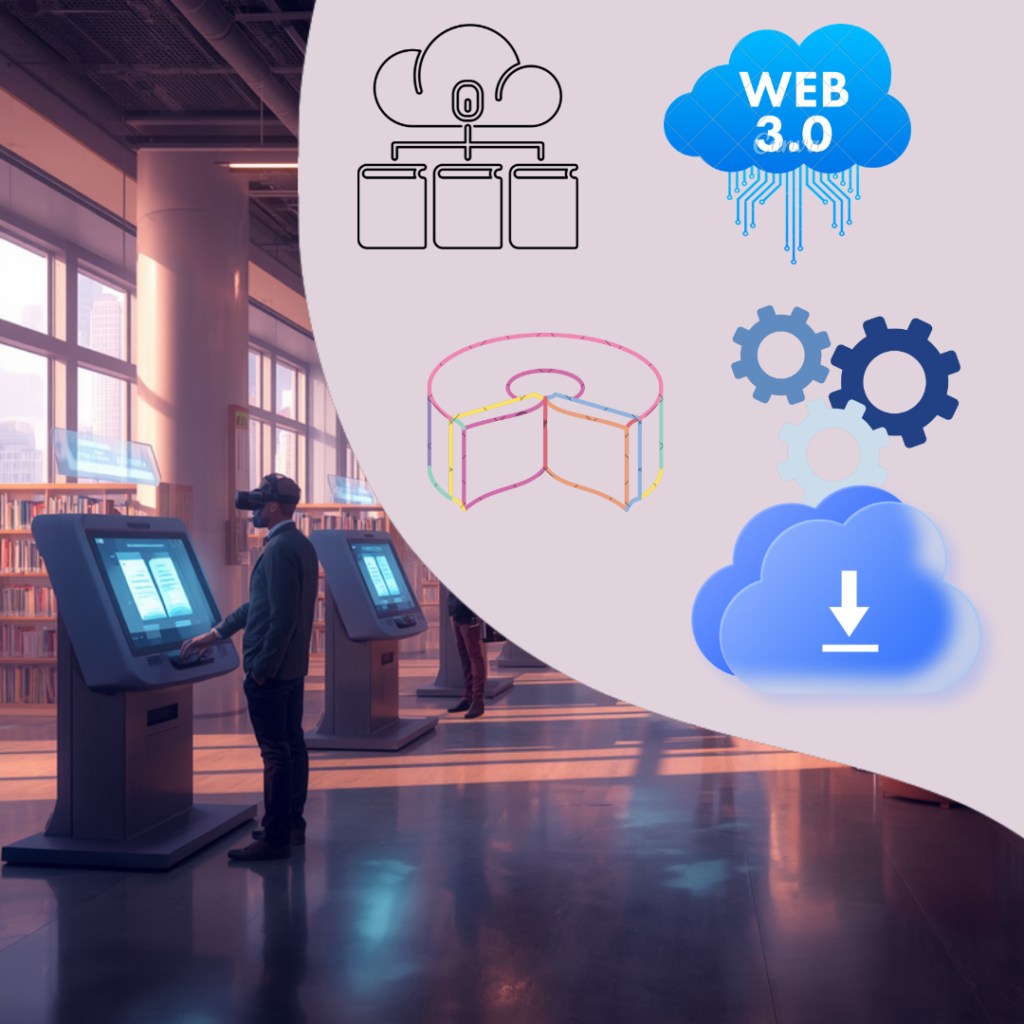
1. Growth of Digital Collections in Libraries
The prevalence of digital materials is increasing rapidly compared to traditional collections in libraries. Libraries are failing to manage these digital collections properly through their traditional integrated software. This has led to the need for new types of software that can manage both digital and archived materials effectively.
According to recent reports, more than 98 percent of public and academic libraries in the United States now provide access to e-book collections, and many libraries also offer audiobooks, streaming media, online journals, and institutional repositories. Large academic and public libraries often maintain digital collections exceeding 100,000 to several million items, including e-books, research papers, multimedia resources, and archival materials.
The use of digital lending platforms has increased dramatically in recent years. In North America, several major library systems now record millions of annual digital borrowings, especially through e-books and audiobooks. The popularity of audiobooks has also grown significantly worldwide, with tens of thousands of new audio titles published every year, and their usage continues to rise due to mobile devices and online learning platforms.
As digital collections continue to expand, libraries are increasingly adopting advanced technologies such as cloud-based library management systems, digital repositories, AI-powered discovery tools, and automated metadata management systems to provide efficient access to both physical and digital resources.
Another aspect of the digital library initiative is the mass digitization or batch digitization of books. Along with Google Books and Internet Archive initiatives, such efforts are also being undertaken by major academic libraries and research institutions. One such initiative is HathiTrust. As of 2026, HathiTrust contains more than 19 million digitized volumes, including over 6.5 million public domain volumes that can be searched, read, and analyzed freely by users worldwide. New software tools are also being developed for searching, analyzing, text mining, and managing these large-scale digital collections. (hathitrust.org)
2. Library Web 2.0 Technology Expansion
Web 2.0 represents the second generation of the World Wide Web, emphasizing user participation, collaboration, interactivity, and content sharing. It enables users not only to access information but also to create, modify, and share digital content easily. Features such as user-generated content, social networking, real-time communication, cloud-based services, and multimedia integration are central to Web 2.0 technologies.
Modern libraries have widely adopted Web 2.0 technologies to enhance library services, improve communication, increase user engagement, and support digital learning environments. Major Web 2.0 applications in libraries include:
a. Library Blogs
Used for sharing library news, announcements, newly arrived books, research updates, event information, reading recommendations, and academic resources.
b. Library Facebook Pages
Enable continuous two-way communication between librarians and users through posts, comments, live sessions, notices, and community engagement activities.
c. Library Wikis
Support collaborative knowledge creation, internal communication, staff training, subject guides, and collective content development among librarians and users.
d. Podcasts
Provide audio-based learning materials such as lectures, interviews, tutorials, orientation programs, book reviews, and updated library news.
e. RSS (Really Simple Syndication) Feeds
Help users receive automatic updates about new publications, journal articles, library announcements, database additions, and current awareness services.
f. Video Conferencing Tools
Platforms such as Zoom, Google Meet, and Microsoft Teams are used for virtual reference services, online classes, webinars, information literacy training, and remote user support.
g. Twitter / X
Used for instant dissemination of library news, emergency notices, event updates, trending information, and quick interaction with users.
h. YouTube Channels
Libraries use YouTube to publish video tutorials, digital literacy programs, recorded lectures, virtual library tours, and instructional content.
i. Instagram and Pinterest
Used for visual promotion of library collections, exhibitions, reading campaigns, creative activities, and user engagement through images and short videos.
j. Social Bookmarking Tools
Applications such as Diigo and Pocket help libraries organize, share, and recommend online resources.
k. Instant Messaging and Chat Services
Libraries use tools like WhatsApp, Messenger, and live chat systems for real-time reference and user assistance.
l. Collaborative Cloud Platforms
Cloud-based services such as Google Drive and Dropbox support document sharing, collaborative projects, and digital resource management.
m. Library Mobile Applications
Mobile apps provide remote access to catalogs, e-books, digital repositories, account management, and notifications directly through smartphones.
n. Online Communities and Discussion Forums
Libraries create online communities for research collaboration, academic discussions, book clubs, and knowledge sharing among users.
The integration of Web 2.0 technologies has transformed traditional libraries into interactive, user-centered, and digitally connected knowledge centers, improving accessibility, participation, and information services in the modern information environment.
3. Rise of Open Source Library Software:
The popularity of open source library software has increased significantly in the last decade. The ‘source code’ or original programming code of such software is open to the public. As a result, anyone can make changes or improvements to it. The most popular open source software in the library sector is Koha – which has been in use for almost 2 decades. Other important open source software include NewGenLib and Evergreen. Another notable digital library software is Greenstone, which combines full test search and metadata-based browsing facilities to provide effective digital library services. Dspace is used to create institutional knowledge bases, which are used for research activities, preservation, cataloguing and distribution of an institution.
4. Features and Benefits of Discovery Systems
The traditional OPAC of the library is now being replaced by the Discovery Service. With the help of this service, users can search the library catalog as well as a large number of content located inside and outside the library from a single search box and get relevance ranked results. The Discovery Service has an interface for users, with the help of which they can search and access various types of content from inside and outside the library.
Discovery software is not part of the library system or repository system, it works independently. Depending on the search or content location and the library’s licensing agreement, various types of services can be available from these software. Such software also has Facets, with the help of which the search results can be narrowed or specified based on specific criteria such as date, author, publisher. In addition, there is a facility to rearrange the search query and display similar materials together based on the given results. The discovery service also includes features such as identifying the current status of a content, requesting content delivery, and downloading content. There are also social features for ranking, commenting, and sharing.
5. Cloud-Based Library Management Services
Library cloud computing-based services have become increasingly popular. It is a type of interface-based service where various services such as servers, storage software, etc. are delivered to the service recipients through the Internet. As a result, the hardware and software of the service recipients are reduced and they can receive powerful server and software services. In view of the initiative to increase network capacity, reduce the cost of hardware and reduce the cost of libraries, many service providers have provided SaaS or Software-as-a-Service services. As a result, libraries have been able to focus on improving the quality of services without worrying about servers and software. Leading proprietary software companies in the developed world are providing high-quality cloud-based services.
6. Role of External Organizations in Library Services
Organizations not directly related to the library sector are now also providing content to library users. Examples:
a. Google Scholar: A web search engine that searches academic and research books. With the help of this, about 160 million books, conference proceedings, theses, preprints, abstract technical reports, payments, etc. can be searched.
b. Amazon Library Processing: A full-fledged processing service, through which processing services including MARC records, levels and barcodes are provided from Amazon. In addition, the initiative to collaborate with the online encyclopedia Wikipedia of Postscript to provide readers with the opportunity to publish more recent information.
7. Improvement of Library Search Interfaces
Users want to use the library search interface in a more easy and effective way. As a result, libraries have made efforts to improve them. Among the features being prioritized are:
- Access to a variety of content through a search box.
- Powerful search capabilities within web search engines.
- Providing high-quality customer service, similar to other web services.
- Increasing reliability, validity, and scope of search.
- Ability to retrieve all types of content, not just printed or electronic materials.
Recent trends in library automation—including digital collections, Web 2.0 technologies, open-source software, discovery services, cloud-based systems, and user-centered interfaces—are transforming libraries into intelligent, interactive, and technology-driven information centers capable of meeting the evolving needs of modern users in the digital age.